Free Things to Do in Amsterdam: A Pay-What-You-Want Walking Tour & More
Amsterdam’s 17th-century Canal Ring is a UNESCO World Heritage Site, and exploring its concentric waterways costs nothing when you do it on foot. For a more structured route, a rated 4.85 pay-what-you-want walking tour of the Jordaan and Canal Belt, run by an independent local guide on GuruWalk, covers the same district in 90 minutes, and a $16 classic canal cruise fills in the water-level perspective that a walking route cannot.
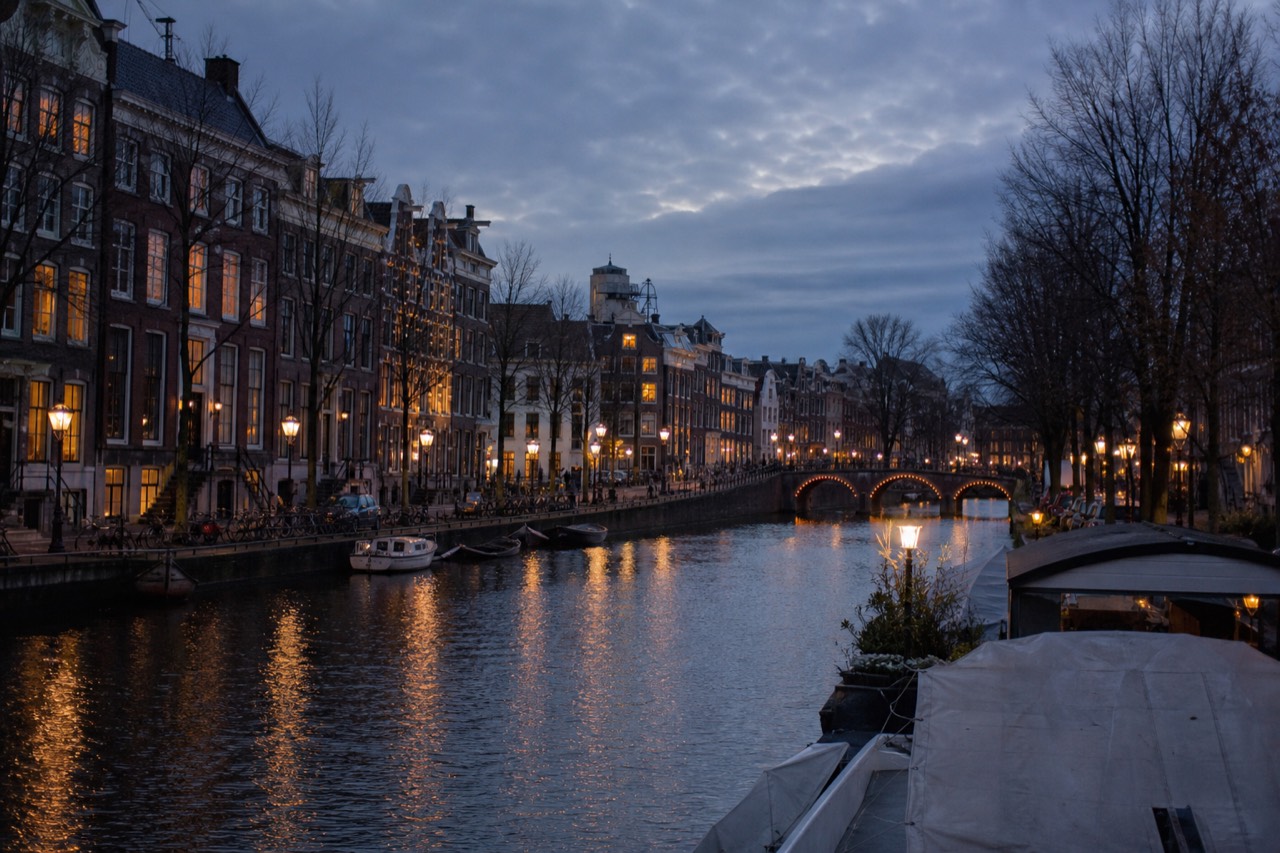
Short answer
You can walk Amsterdam’s canal quays independently for free. For guided stories, the 90-minute English Jordaan and Canal Belt walk has no fixed ticket price, starts at the Anne Frank Statue and invites a voluntary tip. A covered 75-minute canal cruise is an optional paid way to add the water-level view.
Amsterdam’s Canal Ring (the network of concentric waterways dug in the 17th century) has been a UNESCO World Heritage Site since 2010, and the most basic way to experience it is simply to walk (see Amsterdam Canal Ring: the UNESCO World Heritage Waterway Explained). No ticket, no fixed departure time, no minimum group size. For visitors who want a more structured introduction, a pay-what-you-want walking tour run by an independent local guide covers the Jordaan, the Canal Belt and hidden corners in about 90 minutes, entirely on foot. And those who want to see the same canal houses from water level can stay on a very low budget: the 75-Minute Classic Canal Cruise with Audio Guide starts from $16 per person (checked September 2026), rated 4.4 across 20,868 reviews (checked September 2026).
This page explains what the free walking tour includes, how the pay-what-you-want model works in practice, what a walking route cannot replicate, and how to pair a free morning walk with a low‑cost afternoon cruise. As a resource focused on ways to explore the city by boat, Amsterdam Canal Cruises normally writes about paid canal cruises, but the Canal Ring itself can be walked for nothing, and the free walking tour is a genuine budget option worth understanding.
What can you do for free in Amsterdam?
You can walk the entire UNESCO‑listed Canal Ring for free, following the concentric arcs of the Herengracht, Keizersgracht and Prinsengracht past 17th‑century merchant houses, historic bridges and quiet courtyards, without paying a cent. Alternatively, a rated 4.85 pay‑what‑you‑want walking tour (checked September 2026) of the Jordaan and Canal Belt, listed on GuruWalk, provides a guided 90‑minute route for a tip you decide at the end.
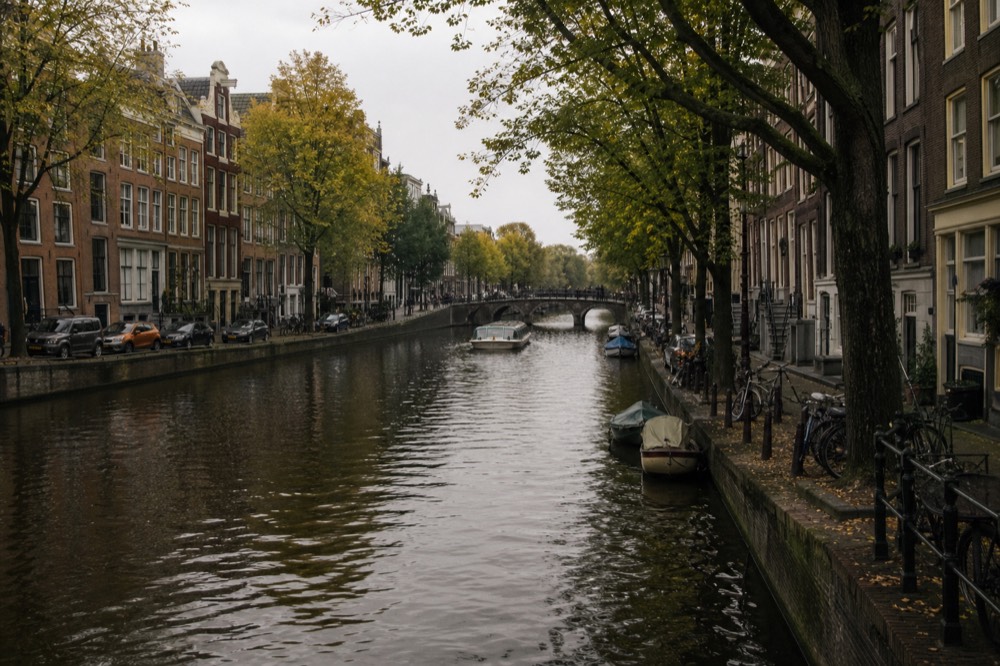
The Canal Ring is not a single attraction with a gate; it is the historic fabric of the city centre. Starting from Centraal Station, a walk of about three kilometres traces the main waterways, crossing the wide Torensluis (completed 1648, the city’s oldest and widest bridge) and passing the Magere Brug, the iconic skinny bridge whose local legend says it was built so two sisters could visit each other more easily. Walking gives you the freedom to stop, read canal‑house gable stones, and slip into a brown café for a coffee without watching a clock.
For many travellers, though, a self‑guided walk misses the stories that turn a row of gabled façades into a coherent history. That is where the pay‑what‑you‑want walking tour steps in. It follows a set route through the Jordaan neighbourhood and along the Canal Belt, with a live guide who explains what you are looking at. Because it charges no upfront fee, it removes the financial risk of a poor tour.
What does the GuruWalk free walking tour actually cover?
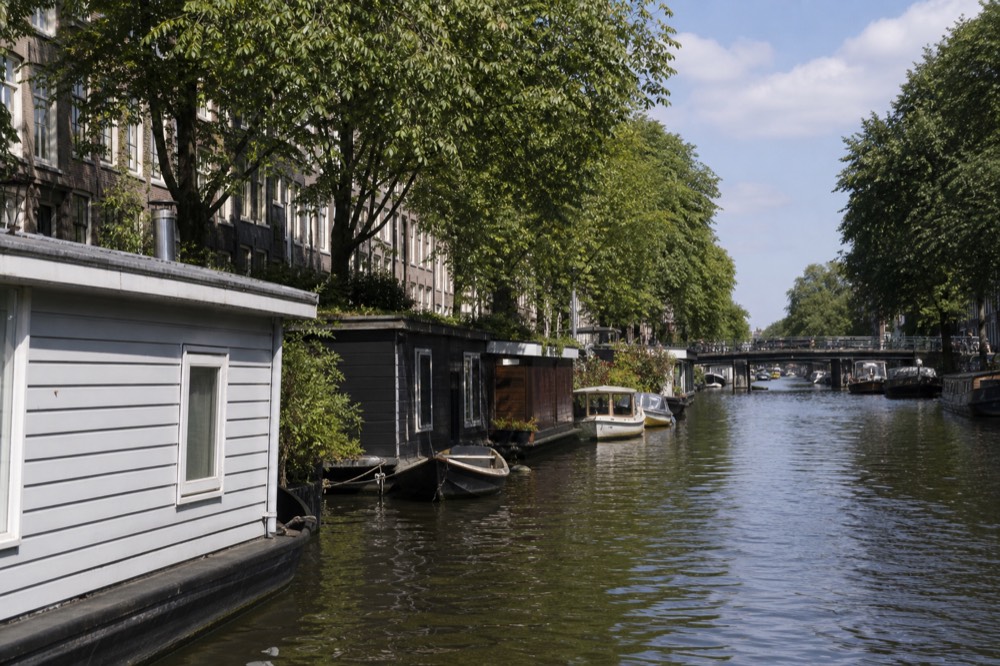
The tour, titled Hidden Gems of Amsterdam: Jordaan, Canals & Local History, is a 90‑minute English‑language route that starts at the Anne Frank Statue (Westermarkt 74, 1016 DL Amsterdam) and walks through the Westerkerk area, Noordermarkt, the Brouwersgracht and the Jordaan’s back lanes, ending near the Canal Belt. The guide, from RoamWorldTours (guiding since 2023), holds a purple umbrella and requires a minimum group of four people to depart.
The meeting point is easy to find: the statue stands on Westermarkt, near the Westerkerk tower. From there the group moves into the Jordaan, a former working‑class district of narrow streets, independent shops and courtyard gardens (hofjes) that are invisible to a passing tram. The guide points out architectural details: stepped gables, neck gables, date stones, and stops at the Noordermarkt, a square that hosts a famous organic farmers’ market on Saturdays and a fabric and vintage market on Mondays. The route then reaches the Brouwersgracht, often voted the city’s most beautiful canal, where the warehouses built for the 17th‑century brewing trade now house apartments with canal‑level windows.
Because the tour stays on pavement and bridges, every viewpoint is from street level. You look down the canal, not across it from the middle of the water. This is the key limitation of any walking route, paid or free, and the reason many visitors later book a boat cruise that shows the same canal houses from the other side.
The walk is listed on GuruWalk, a platform that connects independent local guides with travellers on a pay‑what‑you‑want basis. No upfront payment is made when you reserve a spot; participants choose their contribution at the end.
How does the pay‑what‑you‑want tip model work?
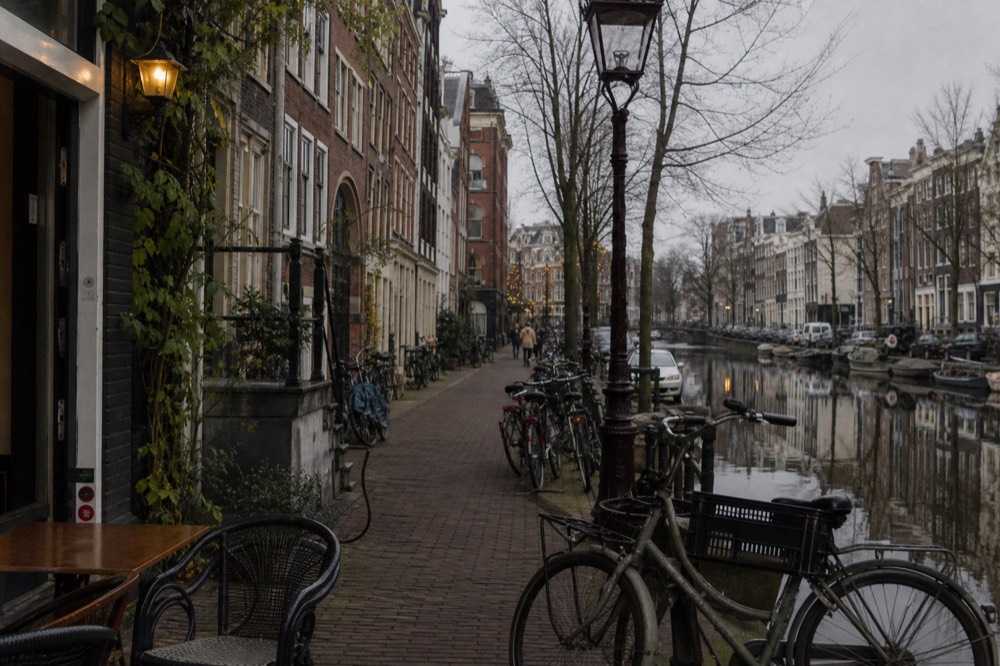
On a pay‑what‑you‑want walking tour, there is no fixed price: at the end of the 90‑minute route, each person hands the guide an amount they consider fair based on their satisfaction and budget. Your contribution is voluntary; the listing does not publish the guide’s platform costs or full earnings arrangements.
There is no prescribed minimum and nobody will chase you for a specific sum. GuruWalk's own listing sets one general guideline, not a rule specific to this walk: the platform suggests between €20 and €50 per participant. Whether you land near that figure, above it or below it is entirely your call, based on how the guide performed and what you can afford. If the tour did not meet expectations, you are free to give less or nothing, though guides point out that a constructive comment helps them improve.
A factor to keep in mind is the 4‑person minimum. On a quiet weekday morning in low season, the group size may be small, and the tour may not run if fewer than four people show up. Booking ahead on GuruWalk is free and gives the guide a sense of expected numbers; you can also cancel without charge if you cannot attend. That flexibility is one reason the model suits budget travellers who want to keep their schedule open.
The walk does not include any food, drink or entry fees: you will pass the Westerkerk and may hear its carillon, but entrance to the church tower costs extra (the tower climb is not part of the route). Public toilets are not free in Amsterdam, so carry a few coins. All of this is standard for free‑walking‑tour formats across Europe.
What does the free walking tour NOT cover compared to a canal cruise?
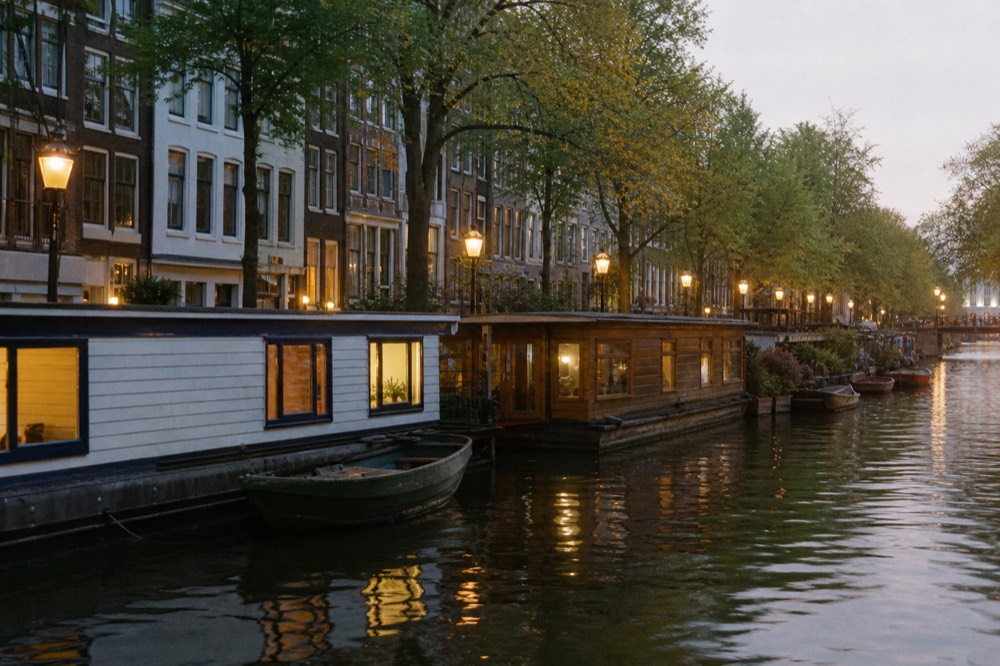
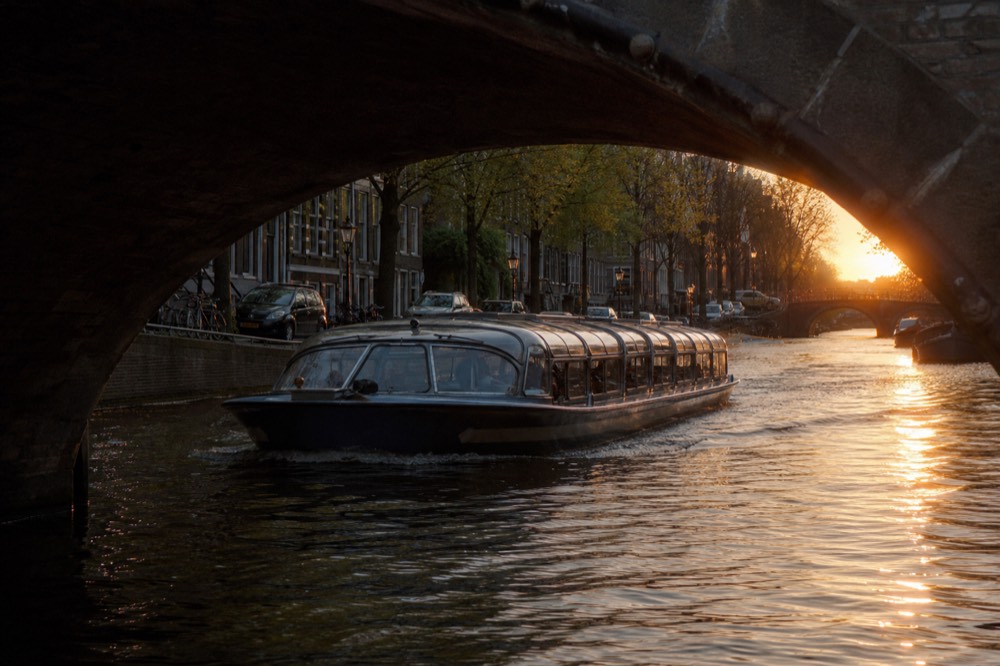
The free walking tour stays entirely on land, so you never see the canal houses from water level, never glide under the low arched bridges, and never pass the houseboats at eye level. It runs in English only, with a fixed group departure that needs at least four people, while a paid 75-minute covered cruise adds multilingual audio and a water-level perspective at the departure you book.
A walking route through the Jordaan and along the Brouwersgracht gives you close‑up views of pavement‑level details: doorways, gable stones, the cobblestone texture of a hofje entrance. What it cannot give you is the reverse perspective: looking back at the canal‑house façades from the middle of the water, where the full vertical rise of the stepped gables becomes visible, and where you see the houseboats as floating homes with gardens on deck. That water‑level angle is what the Classic Canal Cruise with Audio Guide provides, and it is the reason many visitors do both: a free walk in the morning, a $16 cruise later in the day.
Other gaps between the two formats are worth noting honestly. The free walk is conducted entirely in English, while the cruise audio guide is available in multiple languages, so a non‑English‑speaking traveller gets more out of the cruise. The walking tour departs at set times and requires a minimum group of four people; the boat must be booked and boarded according to the selected departure. The walk is outdoors, while the 75-minute cruise uses a glass-roof, all-weather boat.
The free walking tour covers the western Canal Belt and Jordaan on foot, entirely from the pavement. A cruise explores the Canal Ring from the water with recorded commentary. The exact route varies by operator and departure, so do not assume it includes every named canal. The two experiences complement each other rather than duplicate.
When you walk the Jordaan, your guide might pause at a hofje like the Karthuizerhof, where you can step inside a quiet courtyard and see the tiny almshouses that once housed widows. That intimate, ground‑level discovery is something no boat can replicate. Independent walks can also explore narrow side streets like the Tweede Leliedwarsstraat, where the pavement is so tight you can almost touch both walls at once, and the guide can point out a 17th‑century gable stone showing a milkmaid or a carpenter’s guild emblem. From the boat, those same gable stones are too far away to read, but you gain the sweep of an entire row of gables, each with a different shape: the simple spout gable, the ornate neck gable with its decorative scrollwork, and the bell gable that curves like a bell. Audio commentary adds background to the sights, while a walking guide can discuss details at street level; the exact commentary and stops vary.
The houseboats you see from the Brouwersgracht pavement are moored with their backs to you, often showing only a small entrance and a few potted plants. From the water, the same houseboats reveal their full living quarters: a wooden deck with chairs and a table, a row of herbs in a planter, a cat dozing on a cushion, and large windows that reflect the rippling canal. Many Amsterdam houseboats are former inland cargo barges, retired from freight once trucks took over that work and refitted as homes during the city's postwar housing squeeze, each connected to city utilities. Nobody, including this site, publishes a single verified citywide houseboat count (the figures in circulation range from roughly 2,300 to more than 3,000 and no official source picks one), so what matters more than the number is the mooring: the city stopped issuing new permits long ago, so the fleet changes one boat at a time on a fixed spot rather than growing. Recorded commentary and a live walking guide offer different ways to hear about canal life; neither format guarantees every story or sight described here.
Both the walk and a cruise require you to plan around the selected departure and meeting point. The 75-minute Blue Boat cruise offers a glass-roof, all-weather boat and recorded commentary; its departure is at Stadhouderskade 501 or 550 according to your option. Check the time printed on your booking rather than assuming any ticket lets you board the next boat.
| Aspect | Free Walking Tour (GuruWalk) | Classic Canal Cruise ($16) |
|---|---|---|
| Format | 90‑minute walking route | 75‑minute boat ride with audio guide |
| Vantage point | Street level, pavements and bridges | Water level, full canal‑house façades and houseboats |
| Language | English only | Multilingual audio guide |
| Schedule | Fixed group departure, 4‑person minimum | Selected cruise departure; confirm date and time |
| Cost | Pay‑what‑you‑want (GuruWalk's own guideline: €20‑€50) | From $16 per person (checked September 2026) |
| Route coverage | Jordaan, Westerkerk, Noordermarkt, Brouwersgracht | Canal Ring; exact route varies |
| Weather comfort | Exposed to rain and cold | Glass-roof, all-weather boat |
| Booking | Free reservation on GuruWalk; cancel if unable to attend | Book through the operator’s live listing |

The classic cruise also provides a comfortable, rain‑proof seat with commentary in multiple languages, so it works even when a sudden shower would soak a walking group. You can look for architectural details such as stepped gables, neck gables and date stones, but the water‑level perspective adds the sense of how the city was built on reclaimed marshland. For a broader look at which boat tour suits your trip, our guide to the best canal cruises in Amsterdam compares the top‑rated options.
If you are curious about how pricing breaks down across the city’s entire fleet, the canal cruise cost guide explains what a typical ride costs in 2026. To understand why these canals feel so coherent, read our guide to the Amsterdam canals themselves, which explains how the Grachtengordel was planned.
How much should you tip on a free walking tour?
GuruWalk's own general guideline, printed on the listing itself, suggests between €20 and €50 per participant, though the amount is entirely at your discretion and depends on the guide's knowledge, the group size and your budget. That figure is the platform's standing suggestion for its pay‑what‑you‑want walks generally, not a number this specific tour publishes on its own.
The pay‑what‑you‑want model works because it aligns the guide’s incentive with the quality of the tour. If you found the stops informative and the guide’s delivery engaging, your tip reflects that. If the commentary felt thin or the route rushed, you might give less. Guides who consistently receive low tips learn to adjust their content and pacing.
There is no obligation to match what someone else gives, and GuruWalk's guideline is a suggestion rather than a floor. A solo traveller on a tight backpacker budget can give less and a genuine thank‑you; a couple who found the walk a highlight of their trip can give more. The guide will not ask for a specific amount; they usually hold out a hat or a small bag at the end and let people place their contribution discreetly.
This walk accepts electronic or card payment, according to its GuruWalk listing. The contribution remains voluntary. The walk is not suitable for people with reduced mobility, and a single booking can include up to six people.
Common questions about free things to do in Amsterdam
Is the free walking tour really free?
Yes, in the sense that you are not charged an upfront fee to join. Participants choose their contribution at the end, so the tour operates on a pay‑what‑you‑want basis. If you found the walk unhelpful, you can choose to give nothing; GuruWalk's own general guideline for the platform's pay‑what‑you‑want walks suggests between €20 and €50 per participant, but that is a suggestion, not a fee.
Do you need to book ahead on GuruWalk?
Reserving a spot is free and recommended, especially in peak season (April‑September), because the guide has a minimum group size of four people and may cancel if uptake is low. A reservation also lets the guide know the tour is running and helps you plan your day. You can cancel without charge if you cannot attend.
Is this the same as a canal cruise?
No. The walking tour stays on streets and bridges and never goes onto a boat. It covers the Jordaan and the western Canal Belt entirely on foot. To see the canal houses from water level and pass beneath the low bridges, you need a boat tour such as the Classic Canal Cruise with Audio Guide, which starts from $16 (checked September 2026) and provides a completely different perspective.
What is the minimum group size?
Four people. If fewer than four participants show up at the meeting point, the guide may wait a few minutes but can cancel the tour if the minimum is not met. This is more common on quiet winter weekdays; booking ahead reduces the chance of a wasted journey.
How much should you tip on a pay‑what‑you‑want walking tour?
GuruWalk's own general guideline for its pay‑what‑you‑want walks suggests between €20 and €50 per participant. The amount is entirely up to you and should reflect the quality of the guide’s commentary and your satisfaction. Carrying cash in small euro notes is practical.
Match Your Plans And Compare Costs
Editorial starting point. Confirm your date, party requirements and meeting point before booking.
75-Minute Covered Canal Cruise With Audio Guide: glass-roof boat, restroom, children’s audio/booklet; snack and wine boxes optional Reserve a wheelchair space with the operator in advance. Snack and wine boxes are optional extras.
One-Hour Canal Cruise With Departure Options: canal cruise and audio guide Not suitable for wheelchair users
Compare Your Actual Quotes
Enter complete totals for the same party and date, in one currency. For a private boat use the whole-boat quote; for shared tickets add every passenger. These are your quotes, not live prices.
Compare the route, time on board, meals, drinks and cancellation terms alongside the price difference.