Where does a canal cruise in Amsterdam actually start?
Departure points for Amsterdam canal cruises, from the Central Station piers to the Rijksmuseum dock and the Anne Frank House jetty, with what each starting point means for your route.
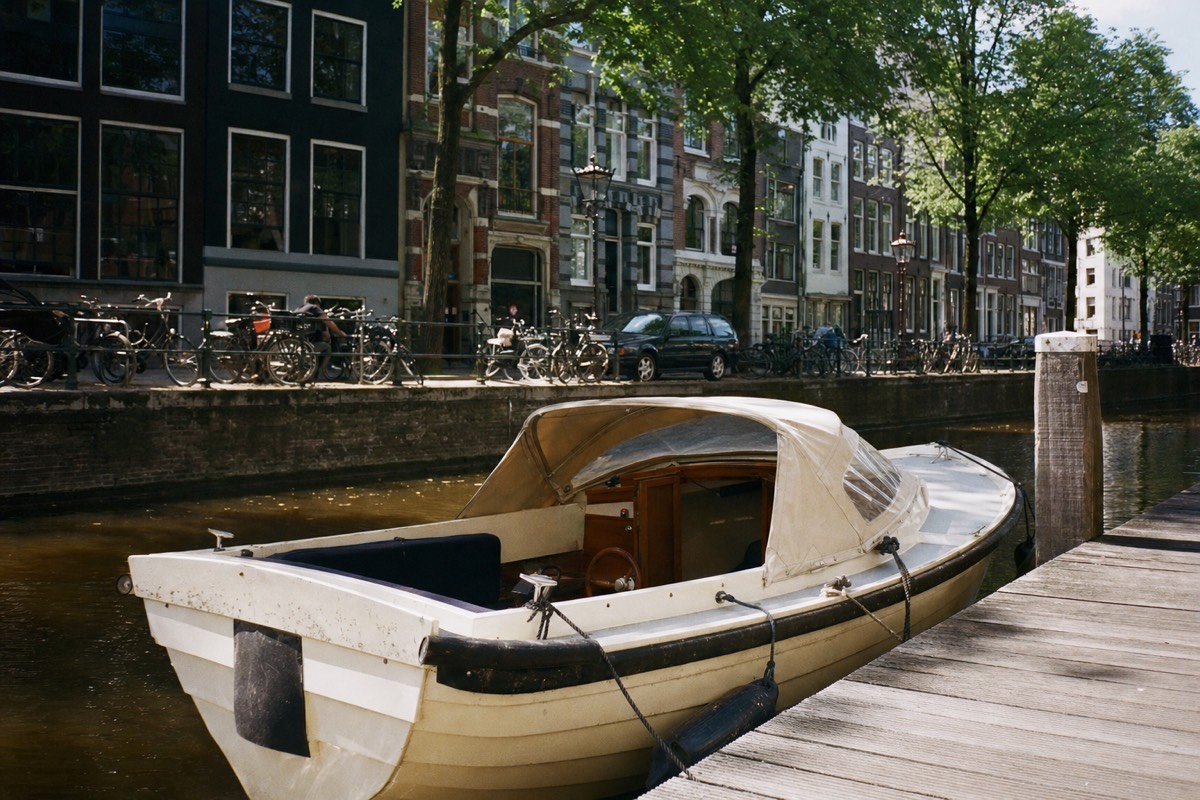
Amsterdam has 165 canals totalling roughly 75 km, and a canal ring that UNESCO inscribed on its World Heritage List back in 2010. Yet nearly every visitor's first question is far more practical: where does the boat actually leave from? The honest answer is that there is no single starting point. Amsterdam's cruise industry is scattered across a string of docks, piers and jetty stairs along the Singel, the Amstel and the Prinsengracht, and each operator runs its own boarding spot.
That fragmentation is good news once you understand it. It means you can pick a departure point near your hotel rather than trekking across the centre, and it means the first ten minutes of your cruise differ enormously depending on where you stepped aboard. A boat leaving behind the Rijksmuseum enters the water at a completely different angle from one chugging out from beside Central Station.
Where does a canal cruise in Amsterdam actually start?
Most Amsterdam canal cruises start at one of a few central departure points: the piers directly outside Central Station on the Damrak side, the jetty at the Anne Frank House on the Westerkerk side of the Prinsengracht, the dock behind the Rijksmuseum on the Stadhouderskade, and a cluster of boarding stairs along the Singel near the Muntplein. The exact dock depends on which operator you book, and the meeting point is printed on the operator's live listing.
The Central Station departure is the workhorse. Boats leave from the water on the station's southern side, a two-minute walk from the main exit, and this is where the large-audience operators such as Blue Boat Company and Gray Line Amsterdam base much of their capacity. If you are staying near the station or arriving by train, this is the most convenient start in the city, but it is also the busiest. Queues form on sunny afternoons and the surrounding water, the Damrak, is the least atmospheric stretch of the entire route. The pretty part comes later.
The Anne Frank House jetty sits on the Prinsengracht, steps from the Westerkerk, and this is where the smaller open-boat and saloon operators such as Flagship Amsterdam tend to board. You start immediately inside the canal ring, gliding past the Jordaan's narrow gabled houses within the first minute. The trade-off is a longer walk or tram ride from the station, roughly fifteen minutes on foot.
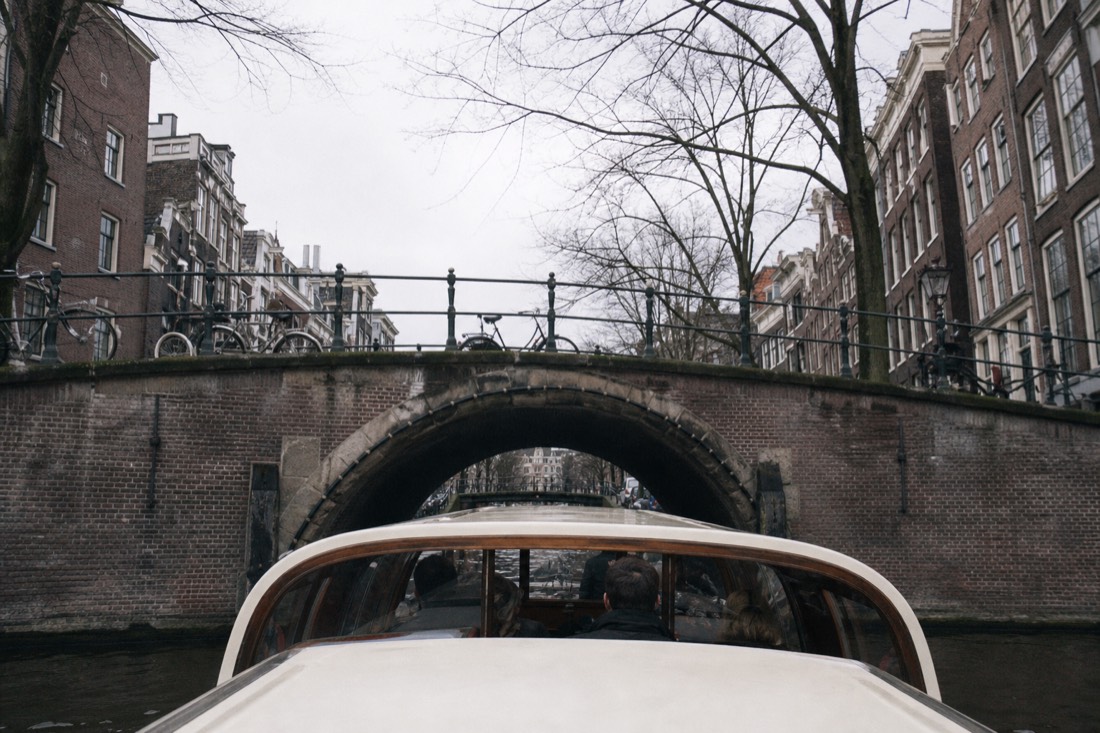
The Rijksmuseum dock, on the Stadhouderskade behind the museum, is the third big hub. From here boats head east along the Stadhouderskade canal before swinging north into the ring, and the surrounding Museumplein area gives you a natural pre-cruise itinerary. Some operators also board near the Muntplein and the floating flower market on the Singel, which puts you close to the Amstel and the classic Reguliersgracht bridge view, one of the most photographed multi-bridge stretches along the ring.
If you are weighing up which overall experience suits you, these three are a solid shortlist:
All three board from central locations, and the meeting point for each is confirmed at the moment of booking on the operator's live listing. Prices for these cruises typically sit in the $20-50 range that dominates the Amsterdam market (checked September 2026), but the exact figure moves with season and departure time, so treat the listing as the source of truth rather than any number quoted here.
Which departure point should you choose?
Choose the Central Station piers if you want maximum schedule frequency and a short walk from the train, the Anne Frank House jetty if you want to start instantly inside the prettiest canal ring streets, and the Rijksmuseum dock if your day is built around the museum quarter. The boat route matters more than the dock, but the dock decides your first ten minutes and your walking time.
Frequency is the hidden factor most visitors overlook. The big Central Station operations run boats so often that you can often show up and board within twenty minutes, which is why they suit travellers who have not booked ahead. If you have already read our advice on whether to book a canal cruise in advance, you will know that the smaller saloon and open-boat cruises sell out their limited seats, and those operators concentrate around the Prinsengracht and Singel jetty stairs rather than the station piers.
Here is how the main departure areas compare in practice:
| Departure area | Nearest landmark | Typical operators | Best for | Watch out for |
|---|---|---|---|---|
| Central Station piers (Damrak side) | Main station exit | Blue Boat Company, Gray Line | Frequency, walk-from-train convenience | Longest queues, least scenic opening stretch |
| Prinsengracht jetty, Westerkerk side | Anne Frank House | Flagship Amsterdam and small saloon boats | Instant canal ring views, intimate boats | Fewer departures, books out earlier |
| Stadhouderskade dock | Rijksmuseum rear | Mixed large-boat and small-boat operators | Museum quarter itineraries | Slightly longer walk from the station |
| Singel / Muntplein stairs | Flower market, Munt tower | Evening and small-group cruises | Amstel access, Reguliersgracht bridge views | Busy square at peak times |
One practical note: the meeting point is not always the same as the company's ticket office. Several operators sell tickets at a storefront on a busy street and board you a few hundred metres away at a specific jetty. Check the exact address on the operator's live listing the day before, because jetty assignments occasionally shift, and Waternet, the city body that regulates boat traffic, can move boarding operations when the waterways are congested.
A simple way to settle the choice is to match the dock to the part of the ring you most want to see from the water. The Reguliersgracht bridge views sit closest to the Singel and Muntplein stairs, so photographers chasing that bridge-dense stretch get more of it per minute by starting there rather than on the open Damrak water. If the concentric ring of Singel, Herengracht, Keizersgracht and Prinsengracht is your priority, the Prinsengracht jetty puts you inside that UNESCO-listed stretch almost immediately, while a Damrak departure spends its opening minutes on wider, less scenic water before reaching it.
Timing interacts with your dock choice too. The Central Station piers absorb crowds with sheer frequency, but the queues there are longest at peak times, so an early morning or late afternoon slot softens that drawback. The smaller saloon boats around the Prinsengracht and Singel stairs cannot do the same, since their limited seats sell out earlier in the day, so if you have not booked ahead, the station piers remain the safer bet and the trade-off is simply a less pretty first stretch of water.
Do all canal cruises in Amsterdam follow the same route from the start?
No. Routes vary by operator, boat size and departure point, and the direction of travel is often opposite between two boats leaving at the same time. Large audio-guide boats from the station typically loop the Damrak first, then the main ring, while small open boats from the Prinsengracht start inside the Jordaan side and may skip the Damrak entirely.
Boat size is the main driver. The classic 75-minute City Canal Cruise with Audio Guide run by Blue Boat Company carries a large cabin of passengers and needs the wider, deeper water, so its route sticks to the principal canals where the bigger vessels fit under the bridges. The average Amsterdam canal is only about 2.6 metres deep, and bridge clearance, not water depth, is what constrains the big boats. Smaller electric open boats and saloon vessels can duck into the narrower Jordaan side canals that the large cruisers physically cannot enter.
That difference is worth knowing before you pick a departure point, because it means the dock and the boat type are really one decision. Board a large boat at the station and your cruise is a grand loop of the three main canals, the Herengracht, Keizersgracht and Prinsengracht. Board a small saloon boat at the Anne Frank House jetty and you get the intimate western canal ring, with a guide pointing out details the audio commentary never reaches.
The Classic Saloon Boat Cruise with Cheese & Wine is a good example of the small-boat pattern: it runs one hour with a live host, boards from a central canal ring jetty rather than the station piers, and holds a 4.6 rating across 26,218 reviews (checked September 2026). Its meeting point is confirmed on the operator's live listing at booking. If the cheese-and-wine format appeals, Check availability before you build the rest of your day around a departure time, because the small boats fill their limited seats first.
Not sure yet whether this is the right cruise for your plans?
Free cancellation terms and pay-later options are listed on the operator's live listing, so you can lock in a departure time without committing your whole itinerary. That flexibility is especially useful for the small saloon boats, where seats are limited but plans change.
Can you start a canal cruise from your hotel or a spot of your choosing?
With a standard ticket, no, you board where the operator boards. With a private boat tour, effectively yes, since private operators often agree to collect you from a canal-side address or hotel jetty within the ring, subject to city rules. Most visitors, though, simply pick the scheduled cruise whose departure point is closest to where they are staying.
Private tours are a different product category from the scheduled cruises covered here, and they command the premium prices the Amsterdam market notes describe. For the scheduled boats, the departure point is fixed, which is why it pays to check the dock address before booking rather than after. A cruise that boards at the Rijksmuseum is a poor fit if your hotel is by the station and you have a tight evening plan.
The walkability of the centre makes this less painful than it sounds. The distance from Central Station to the Anne Frank House jetty is about fifteen minutes on foot, and the station to Rijksmuseum walk is closer to twenty-five, or a short tram ride. Everything in between is the canal ring itself, so even the "wrong" departure point hands you a scenic walk as compensation. If you are still deciding what kind of cruise you want at all, our overview of the best canal cruise to take in Amsterdam ranks the formats side by side.
What time do canal cruises start, and when should you arrive at the dock?
Scheduled canal cruises typically start from late morning and run on a rolling timetable into the evening, with first departures usually in the late morning and the last boats leaving after dark in summer and earlier in winter. Arrive at the dock 15 to 20 minutes before your slot, earlier at the Central Station piers where boarding queues are longest.
The rolling timetable is why the departure point question and the timing question are tangled together. The station piers run the densest schedules, so a missed boat there costs you twenty minutes at most. A small saloon boat with a handful of departures per day is far less forgiving: miss it and the next seat may be gone. This is the practical logic behind booking ahead, and it applies double to the food-and-drink cruises, which prep provisions for a fixed passenger count.
Season shifts the whole schedule. In summer the evening boats run late enough to catch the sunset over the ring, while in deep winter the last departures pull in earlier and the heated boats become the comfortable choice. The timing of light matters more than most visitors expect, and the same dock can feel like two different experiences at noon and at dusk. The golden-hour departures are the ones that sell out first in peak season, which is another quiet argument for choosing your slot before you arrive in the city rather than at the ticket window.
Does the departure point affect the price?
Not directly. Amsterdam canal cruise prices cluster in the $20-50 range (checked Sep 2026) for a standard one-to-one-and-a-half-hour loop regardless of which central dock you board from, and price differences come from boat type, inclusions like drinks and food, and guide style rather than geography. A cheese-and-wine cruise from the Prinsengracht costs more than a basic audio-guide loop because of what is on the table, not because of the jetty. (checked September 2026) (checked September 2026)
This is worth stating plainly because a common traveller assumption is that the "touristy" station piers charge more. They do not, in any consistent way. The market is priced by format: the basic large-boat loop with audio guide, the heated cruise with unlimited drinks, the tasting cruises, and the full dinner cruises at the top of the range. Typical prices for the standard tours run $19-47 for one to one-and-a-half hours (checked September 2026), per the market data, while dinner and private options command clear premiums and sell strongly for evenings and special occasions.
For the current figure on any specific cruise, the operator's live listing is the only reliable source. Ratings and review counts are similarly live: the Classic Saloon Boat Cruise with Cheese & Wine holds 4.6 from 26,218 reviews, the 75-minute City Canal Cruise holds 4.4 from 19,764, and the pizza dinner cruise holds 4.5 from 2,642 (checked September 2026), but those numbers move week to week and the listing will always be fresher than any article, including this one. If budget planning is your main concern, start with our breakdown of how much a canal cruise costs in Amsterdam.
Between those three you cover the three most common starting scenarios: the saloon boat with drinks from a canal ring jetty, the high-frequency audio-guide loop from the station area, and an evening dinner option for the sunset slot. Whichever you lean toward, the exact departure address appears on your booking confirmation, and that confirmation is the document to check the night before, not the morning of.
Is the departure point ever different from the ticket office?
Yes, fairly often. Several Amsterdam operators sell or check in tickets at a street-level office or kiosk, then walk the group a few minutes to the actual boarding jetty. The listing and your confirmation give the meeting address, and that address is where you need to be, not the boat.
This trips up first-time visitors more than any other logistics detail. You arrive at the water, see boats, and assume boarding is there. Ten minutes later you discover the operator's jetty is one bridge further along. The fix is simple: screenshot the meeting address from your confirmation, and treat the check-in time as the moment you must be at that address, with the actual boarding a short guided walk away.
The 75 Minute City Canal Cruise with Audio Guide is a case where the departure logistics are engineered for simplicity: Blue Boat Company runs it from the station-side piers on a dense timetable, 4.4-rated across 19,764 reviews (checked September 2026), and the 75-minute duration is long enough to cover the full main ring from a single central start. The station-side boarding also means the walk from the train to the boat is about as short as Amsterdam geography allows, which makes it the natural choice for a first-day arrival cruise.
Common questions about canal cruise departure points in Amsterdam
Amsterdam canal cruises depart from a small set of central docks, the station piers, the Prinsengracht jetty, the Rijksmuseum dock and the Singel stairs, and the specific address for your cruise is always on the operator's live listing and your booking confirmation. The questions below cover the details that trip up most first-time visitors.
Where does the Amsterdam canal cruise start?
At one of several central departure points: the piers outside Central Station on the Damrak side, the jetty by the Anne Frank House on the Prinsengracht, the dock behind the Rijksmuseum on the Stadhouderskade, or boarding stairs along the Singel near the Muntplein. The exact dock depends on your operator and is printed on the operator's live listing and your booking confirmation.
Is there one main departure point for all canal cruises?
No. Amsterdam has no single central cruise terminal. Departures are spread across the station piers, the Prinsengracht jetty, the Rijksmuseum dock and the Singel, with each operator running its own boarding spot.
How far is the canal cruise departure point from Central Station?
The station piers are a two-minute walk from the main exit. The Anne Frank House jetty is roughly fifteen minutes on foot, and the Rijksmuseum dock around twenty-five minutes, or a short tram ride.
Is the meeting point the same as where the boat boards?
Not always. Some operators check in at a street office and then walk the group to the jetty. Follow the meeting address on your confirmation, not the sight of boats on the water.
How early should I arrive at the dock?
Fifteen to twenty minutes before your departure slot, and earlier at the Central Station piers where queues are longest. For small saloon boats with few daily departures, arriving early matters even more because missed seats are not always replaceable.
Does the departure point change the route?
Yes. Boats from the station usually cross the Damrak before entering the ring, while small boats from the Prinsengracht start immediately inside the Jordaan-side canals. The dock decides your opening stretch and often the direction of travel.
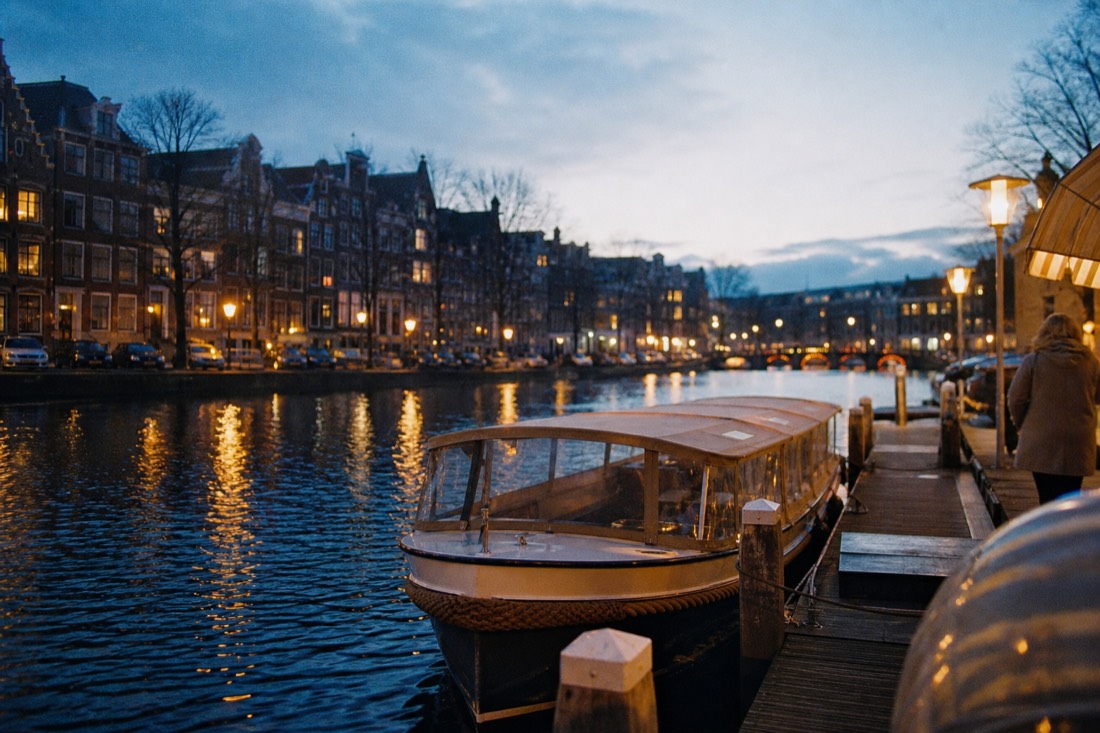
The short version: pick your cruise first, then let its departure point shape your walking plan, not the other way round. The dock is a detail, but it is the detail that determines whether your day flows or starts with a panicked jog along the Prinsengracht. For everything else, from formats to timing, Amsterdam Canal Cruises has the rest of the picture.