Do you need to book a Canal cruise in advance in Amsterdam?
Whether you need to book an Amsterdam canal cruise in advance, which tours sell out first, and when walking up to the dock still works.
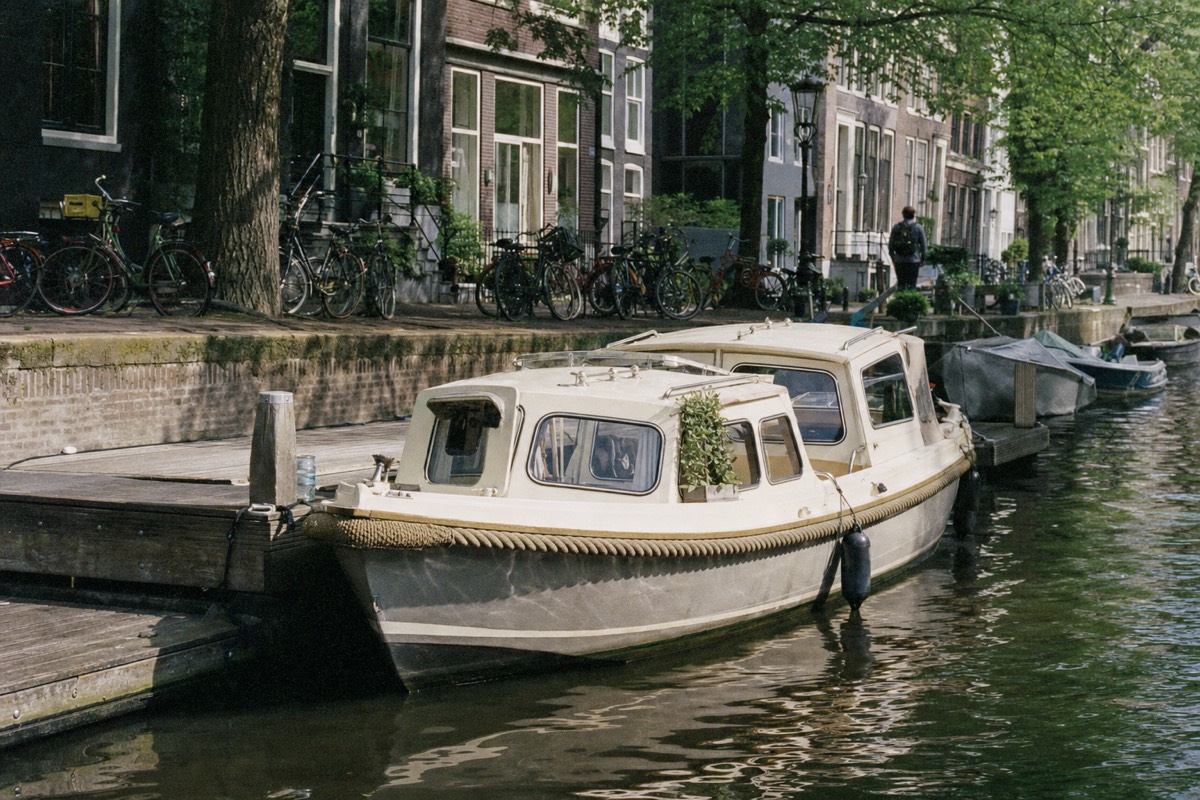
Do you need to book a canal cruise in advance in Amsterdam? The honest answer depends entirely on which cruise you want and when you want it. Amsterdam runs more canal cruises per square kilometre than almost any city on earth, the boats leave constantly, and for a plain one-hour sightseeing run you can often buy a ticket at the jetty twenty minutes before departure. The moment you add anything to the boat, wine, cheese, dinner, a small open vessel, a sunset slot, the picture changes, and those are precisely the cruises that sell out first.
One number from the live listings explains why planning matters here: the Classic Saloon Boat Cruise with Cheese & Wine carries a 4.6 rating built on 26,218 reviews (checked September 2026), and the evening sunset cruise from Eco Boats Amsterdam was booked 193 times in a single day according to its listing. That is the level of demand you are competing with. This article walks through exactly when advance booking is essential, when it is optional, and how to think about the choice if you are the type of traveller who hates committing to a schedule.
Do you need to book a canal cruise in advance in Amsterdam?
No, not always: standard one-hour sightseeing cruises run every 15 to 30 minutes from several jetties and often have walk-up availability, but food cruises, sunset departures and small-group boats regularly sell out days or weeks ahead, so for those, yes, book in advance.
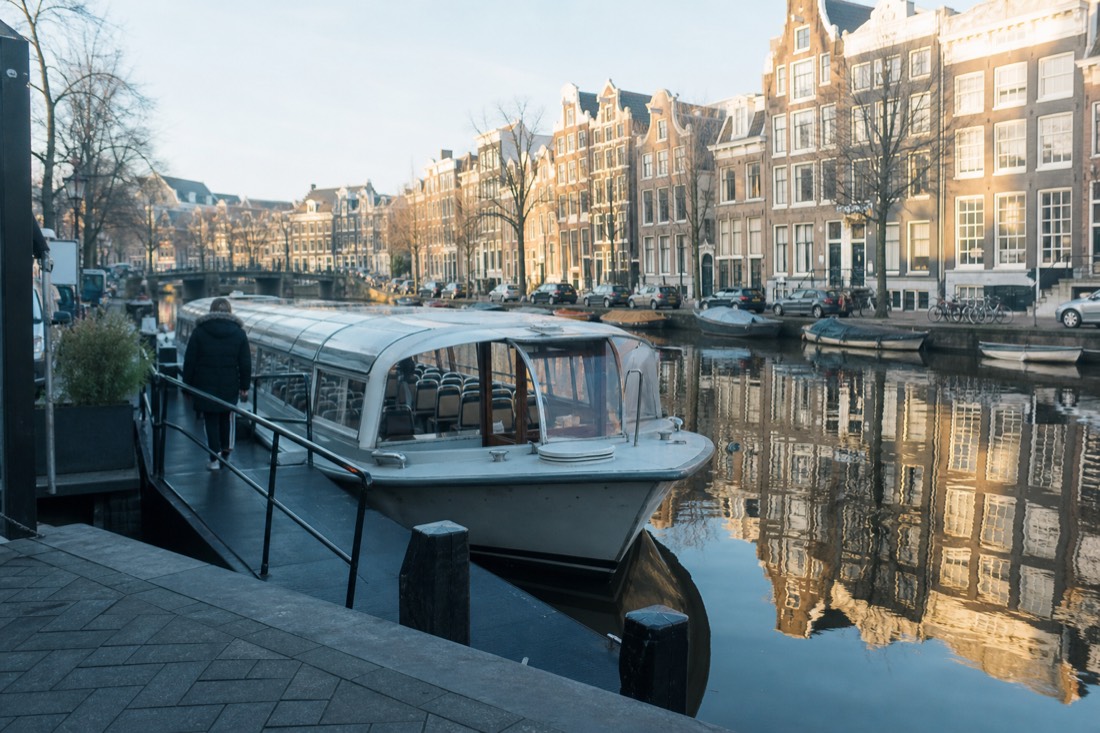
The cruise market in Amsterdam splits cleanly into two products. The first is the commodity sightseeing run: a covered boat, an audio guide, a fixed loop through the canal ring, departing all day from multiple docks. The 75 Minute City Canal Cruise with Audio Guide from Blue Boat Company is the archetype, rated 4.4 across 19,764 reviews (checked September 2026). Boats like this leave so frequently that walk-up tickets are usually available outside the absolute peak of summer, and even then you might simply catch the next departure rather than the one you queued for.
The second product is everything with a hook: the cheese and wine tasting, the pizza dinner cruise, the high-end three-course dinner run, the evening sunset boat with drinks. These have limited capacity per departure because food service constrains seating, they run fewer times per day, and they carry the ratings that push them to the top of every search result. The High-End 3-Course Dinner Canal Cruise from Rederij Aemstelland, rated 4.6 (checked September 2026), runs two hours and fifteen minutes, and a boat like that simply cannot absorb walk-up demand.
There is a third factor that first-time visitors consistently underestimate: group size. Amsterdam's canal fleet includes a large number of small electric open boats, and those vessels are legally capped at a dozen or two passengers. A couple can usually squeeze onto a small boat at short notice. A family of six arriving in July without a booking is asking for disappointment, because the small boats fill first and the large covered boats are what is left.
When is booking ahead actually essential?
Book in advance for any cruise involving food or drink, any sunset or evening departure, any small-group or open boat, and any cruise during peak season, roughly April through August, plus the Christmas period, when demand spikes hardest and the popular boats fill days before departure.
Food cruises are the clearest case. Consider what a pizza or dinner cruise physically is: a boat with a galley, a fixed number of covers, a service crew, and a catering order placed in advance of the departure. The operator cannot add seats the way a sightseeing operator can add another boat. The Original Pizza Dinner Cruise with Drinks from Stromma Netherlands, rated 4.5 with 2,642 reviews (checked September 2026), is exactly the kind of product where the operator plans the evening around confirmed bookings, and walk-ups are either impossible or a lucky exception.
Sunset slots are the second hard case. There is only one golden hour per day, and in a city that welcomes visitors year-round, the evening boats are the ones everyone photographs. The Eco Boats Amsterdam sunset cruise listing shows the demand plainly: booked 193 times in a single day, flagged as top rated. You cannot create a second sunset. If the evening boat is the centrepiece of your day, and for most visitors it is, booking two or three days ahead is the sensible floor, and a week ahead in summer.
Peak season deserves its own warning. Amsterdam's tourist year no longer has a quiet shoulder in the way it once did, but the pressure between April and August, and again around the holidays, is on a different scale. The canal ring itself was inscribed by UNESCO in 2010 as the Seventeenth-Century Canal Ring Area of Amsterdam inside the Singelgracht, and the crowds that status attracts now book their boats before they fly. If you are visiting in those windows and you have your heart set on a specific cruise, book it the same week you book your hotel.
When can you safely walk up and buy on the day?
For a standard sightseeing cruise on a weekday outside peak summer, walk-up booking works most of the time: departures run every 15 to 30 minutes, jetties cluster near Centraal Station, the Rijksmuseum and the Anne Frank House area, and you simply take the next boat with seats.
The city's own geography helps here. Amsterdam has 165 canals totalling roughly 75 km, and cruise operators base themselves along the busiest visitor corridors. A canal cruise from Anne Frank, the Rijksmuseum or Centraal Station exists precisely because foot traffic there is constant, and operators price and schedule for impulse buyers. If your plan is "we will find a boat at some point today," you will find a boat.
That said, walking up works best with flexibility in three dimensions: time, departure point, and boat type. You may have to wait one or two departure cycles at your chosen jetty. You may have to stroll to a different dock a few blocks along the canal. And you may end up on a large covered boat with an audio guide rather than the small open boat you pictured. If all three of those trade-offs are acceptable, walk-up is a legitimate strategy, and it has a real advantage: you can look at the sky first. Amsterdam weather changes hourly, and buying on the day means you can pick the sunny window instead of the rainy slot you committed to three weeks ago.
The one walk-up scenario that fails reliably is the group of five or more arriving between 11:00 and 16:00 in July. That is when every jetty is processing walk-in demand at capacity, and the seats go to whoever is standing there when the boat loads. Solo travellers and couples have far more walk-up flexibility than groups, simply because two seats together are easier to find than eight.
How far in advance should you book each type of cruise?
As a planning rule: standard sightseeing cruises can be booked same-day or walked up; popular cheese and wine or evening cruises should be booked two to seven days ahead; dinner cruises and small-group boats in peak season should be booked one to four weeks ahead.
These ranges are planning guidance, not operator promises, and the only firm figures live on each operator's live listing at the moment you book. But the tiers hold because they follow the capacity logic of the boats themselves.
| Cruise type | Typical walk-up odds | Sensible booking window | Why |
|---|---|---|---|
| Standard sightseeing cruise with audio guide | Good outside peak hours | Same day to 2 days ahead | Frequent departures, large boats, multiple jetties |
| Cheese and wine tasting cruise | Poor in peak season | 2 to 7 days ahead | Fewer departures, tasting service limits seats, very high demand |
| Evening or sunset cruise | Poor in summer | 3 to 7 days ahead | One golden hour per day, most-photographed slot |
| Dinner cruise (pizza or multi-course) | Very poor | 1 to 4 weeks ahead | Fixed covers, catering planned per departure |
| Small-group or open boat cruise | Poor for groups, fair for couples | 3 to 10 days ahead | Legal passenger caps keep boats small |
| Heated winter cruise with drinks | Fair | 2 to 5 days ahead | Seasonal demand concentrated on fewer products |
The table is worth reading twice if you are travelling in a group, because the booking window for a party of six on a small open boat is effectively the dinner-cruise window, not the sightseeing window. Small boats are the product most likely to be flagged as likely to sell out on the live listings, and the reason is arithmetic: twenty seats, six of them yours, everyone else booking from their phones the night before.
Does the day of the week or time of day change the answer?
Yes: weekends and the 11:00 to 16:00 window compress availability hardest, so a cruise you could walk up to on a Tuesday morning may need a booking on a Saturday afternoon, and early morning or late evening departures are the walk-up sweet spots.
Day of the week matters more in Amsterdam than in most cruise cities because the domestic and regional market is large. Dutch and German visitors flood in for weekends year-round, not just in summer, and a Saturday in May can out-demand a Tuesday in July. If your itinerary has any flexibility, shifting a must-do cruise to a weekday buys you both availability and a quieter boat.
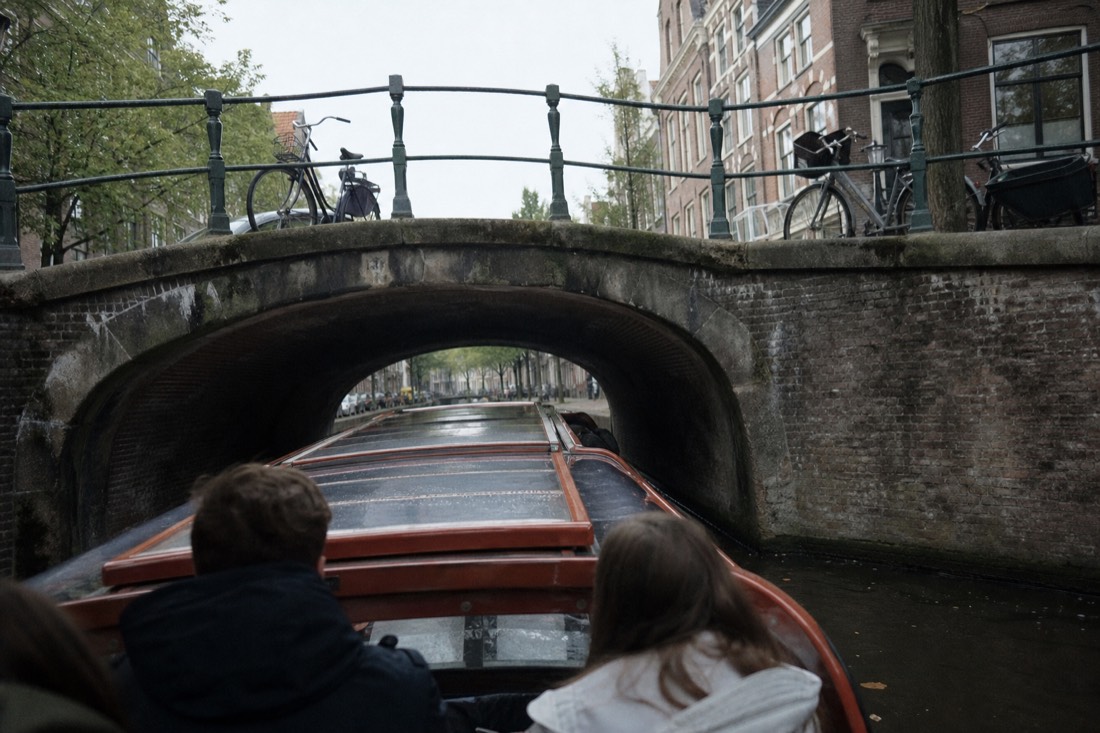
Time of day works the same way. The middle of the day is when tour groups, families with small children and cruise-ship passengers all converge on the jetties. The first departures of the morning and the last departures before the dinner hours run with noticeably more spare capacity. There is a photographic argument for the golden hour too: the stretch around Reguliersgracht is one of the most photographed multi-bridge views on the canal ring, and the light there is at its best in the evening, which is one reason the sunset boats fill first.
If you want a deeper look at how departure time shapes the whole experience, the piece on the best time of day for a canal cruise breaks down morning versus evening boats in detail, and the comparison of day versus night cruising covers what you actually see differently after dark.
What happens if a cruise is sold out when you arrive?
If your first-choice cruise is sold out, you have three fallbacks: take a standard sightseeing cruise instead, which almost always has seats, rebook the same product for a different day or departure, or check the operator's live listing for last-minute releases, which happen when groups cancel.
Sold out does not mean the day is ruined, it means the plan shifts. The standard sightseeing fleet is the pressure-release valve of the whole market: boats leave constantly, capacity is large, and the core experience, gliding through the Herengracht, Keizersgracht and Prinsengracht past gabled facades and under the city's 1,281 municipal bridges, is the same one every other boat delivers. The three main canals of the Grachtengordel are the heart of every route, and no operator has a monopoly on them.
Last-minute releases are real and underused. Group cancellations ripple through booking systems in the final day before departure, and a cruise that showed no availability on Monday frequently shows seats on Tuesday morning. If you are already in the city and the cruise you want is full, set a reminder to recheck the operator's live listing the day before and the morning of. This works especially well for food cruises, where a cancelled party of eight frees up real capacity.
The fallback that fails is turning up at the jetty and negotiating. Canal cruise crews in Amsterdam have no discretion over pricing or capacity, and the person scanning tickets is not going to conjure a seat. The pricing question has its own article: how much a canal cruise costs in Amsterdam covers the typical ranges, and knowing them helps you judge whether a walk-up price is normal or a peak-day premium.
Is it better to book ahead for peace of mind or keep flexibility?
Book ahead when the cruise is the point of your day, keep flexibility when the cruise is a filler, and split the difference by booking one anchor cruise in advance and leaving the standard sightseeing run to walk-up luck, which is the approach that captures the best of both worlds.
This is the real decision, and it is a temperament question as much as a logistics one. The traveller who books everything in advance gets the cruise they wanted at the hour they wanted it, and pays for that with a schedule they must keep. The traveller who books nothing gets total spontaneity, and pays for it with the risk that the sunset pizza cruise they read about is full. Neither approach is wrong, but the costs are asymmetric: missing a cruise you never booked is a shrug, missing a cruise you planned your evening around is a ruined night.
The split strategy solves most of it. Book the one cruise that matters most, the dinner, the cheese and wine run, the sunset boat, whatever it is, before you travel. Then treat the standard sightseeing cruise as a walk-up purchase, because it is the one product where spontaneity costs you almost nothing. You get your anchor experience guaranteed and your wandering hours intact.
One practical note on the anchor booking: check the cancellation terms on the operator's live listing before you pay. Many Amsterdam cruise listings allow free cancellation up to a day or so before departure, and where that applies, booking ahead costs you nothing in flexibility at all, you are simply holding a seat you can release. That single detail turns advance booking from a commitment into an option, and it is the reason the peace-of-mind answer usually wins for anything involving food or a sunset.
If you are still deciding which cruise deserves the anchor slot, the comparison of the best canal cruise to take in Amsterdam is the natural next read, and Amsterdam Canal Cruises covers the whole lineup, from sightseeing runs to dinner boats, so you can see every option side by side before you commit a single evening.
Common questions about booking a canal cruise in advance
You do not need to book every Amsterdam canal cruise in advance, but the in-demand products, food cruises, sunset boats and small-group vessels, should be booked ahead, while standard sightseeing runs can usually be walked up to on the day.
Do you need to book a canal cruise in advance in Amsterdam?
Not always. Standard one-hour sightseeing cruises depart every 15 to 30 minutes from multiple jetties and often have walk-up seats, but food cruises, sunset departures and small-group boats regularly sell out, so those should be booked in advance.
How far in advance should I book an Amsterdam canal cruise?
As a planning range: same-day to two days for standard sightseeing cruises, two to seven days for popular cheese and wine or evening cruises, and one to four weeks for dinner cruises and small-group boats in peak season. Check the operator's live listing for the only firm availability.
Can you buy canal cruise tickets at the dock in Amsterdam?
Yes, for standard sightseeing cruises. Jetties near Centraal Station, the Rijksmuseum and the Anne Frank House area sell walk-up tickets, though you may wait for the next departure with seats. Food and sunset cruises are far less likely to be available at the dock.
Which Amsterdam canal cruises sell out first?
Cruises with food or drink service, sunset departures, and small open boats sell out first, because catering and passenger caps limit each departure's seats. The cheese and wine saloon boat cruise and the evening sunset cruise are consistently the most in-demand products.
Do Amsterdam canal cruises sell out in winter?
Less often than in summer, but heated winter cruises with drinks concentrate demand onto fewer products, so they can still fill. Weekends and the Christmas period are the winter windows where booking ahead still matters.
Is it cheaper to book a canal cruise in advance or at the dock?
There is no reliable rule that either is cheaper. Walk-up prices can carry a peak-day premium, and advance prices can rise as a departure fills. The reliable way to save is to compare the operator's live listing against the dock price on the day, and remember that availability, not price, is the real reason to book ahead.
The last word goes to the simplest framing. Ask yourself whether a full boat would ruin your evening. If yes, book ahead, hold the seat, and check the cancellation terms so the booking stays reversible. If no, walk to the jetty, look at the sky, and take the next boat going. Amsterdam has 75 km of canals and a fleet that never fully stops, and there is almost always a deck with your name on it, the only question is whether it is the deck you wanted.