Which canal street in Amsterdam is considered the most beautiful?
The honest answer to which Amsterdam canal street is the most beautiful, why Reguliersgracht wins the photographs, and how to see it from the water.
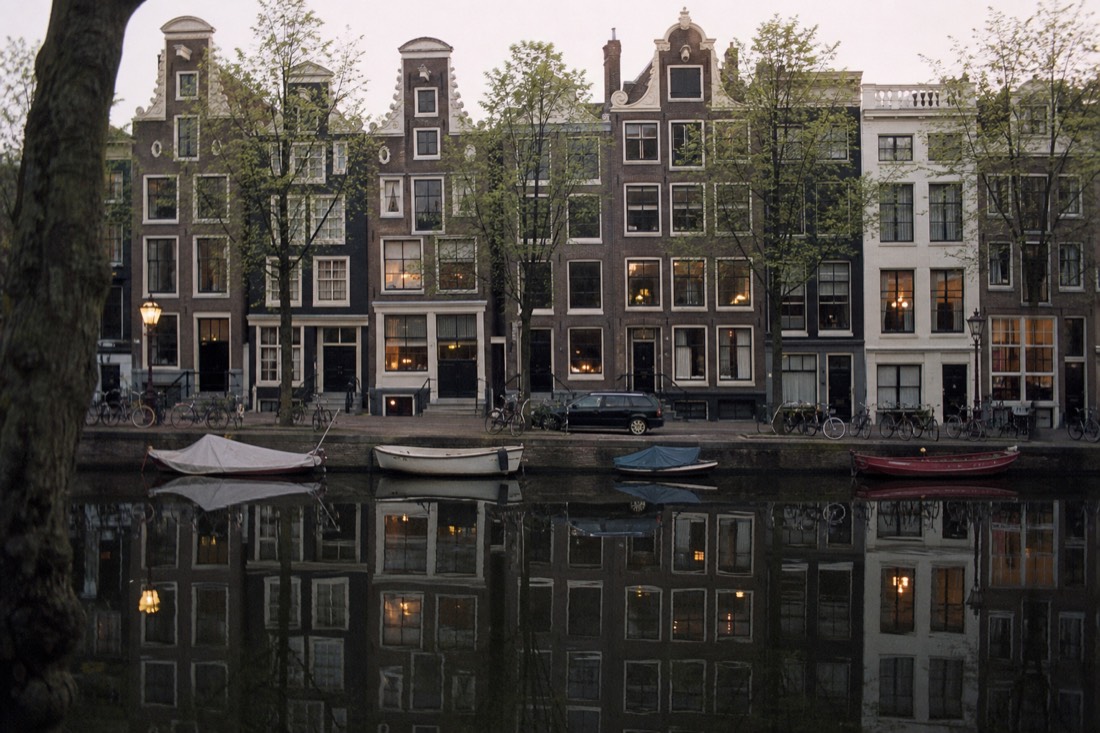
Ask a local which canal street in Amsterdam is the most beautiful and you will usually get a pause before an answer. The city has 165 canals stretching about 75 km in total, and a large share of them are genuinely lovely, so the question is really about which stretch photographs best, which one feels best to walk, and which one feels best from the water. Those are three different answers, and this article gives you all of them.
The short version: the Reguliersgracht, with its row of seven bridges stacked into a single view, is the stretch most often called the most beautiful canal street in Amsterdam. But the Herengracht, the Prinsengracht and the Brouwersgracht each have a serious claim, and which one wins for you depends on what you are there to see.
Which canal street in Amsterdam is considered the most beautiful?
Most guidebooks, photographers and locals point to the Reguliersgracht, the short canal near the flower market whose view over seven consecutive bridges is the single most photographed canal scene in Amsterdam. The Herengracht runs a close second for pure grandeur, and the Brouwersgracht wins for quiet, lived-in charm.
The Reguliersgracht earns its reputation honestly. It is a short canal, only a few hundred meters long, connecting the Herengracht to the Amstel, and along it sit seven 17th-century bridges in a straight line. Stand at the right spot, ideally near the corner with the Herengracht, and the bridge arches stack one behind another into a receding tunnel of brick and water. On a still evening, the whole composition doubles in the canal below.
That view is why the stretch around the Reguliersgracht is widely described as the most photographed multi-bridge view along the entire canal ring. It is also why almost every canal cruise route in the city includes at least a pass through it or its immediate neighbors. If you have seen an Amsterdam postcard with bridges in it, odds are very good you were looking at the Reguliersgracht.
There is a second answer that matters, though. The concentric ring formed by the Singel, Herengracht, Keizersgracht and Prinsengracht is the heart of the area inscribed on the UNESCO World Heritage List in 2010, and each of those four canals has a distinct character. The Herengracht was built as the prestigious residential canal for the wealthiest merchants, with wider plots and garden spaces behind the houses. The Prinsengracht, by contrast, was the working canal, lined with warehouses and narrower dwellings along the Jordaan. Beauty in Amsterdam is not one thing: it is grandeur on the Herengracht, intimacy on the Prinsengracht, and geometry on the Reguliersgracht.
The canal ring was designed at the end of the 16th century and built primarily during the 17th-century Dutch Golden Age as a planned expansion of the city, which explains the geometry that makes the Reguliersgracht view possible. This was not a city that grew by accident. The grachten were laid out on paper first, in concentric arcs, and the straight sightlines that photographers love today are a direct inheritance of that plan. When you stand on the Reguliersgracht looking down seven bridges, you are looking at 17th-century urban design working exactly as intended.
If you want to see these streets rather than only read about them, a canal cruise is the natural way to do it, since the routes thread the canal ring in under two hours. These three are the most popular options for a first visit:
Each of those cruises covers a different slice of the ring, and all three pass through or alongside the canal streets discussed below. The classic saloon boat cruise with cheese and wine, for instance, runs a full hour through the center, which is enough water time to see the Reguliersgracht, the Herengracht and the Amstel edge in one sitting.
Why is the Reguliersgracht so photographed?
The Reguliersgracht lines up seven stone bridges in one straight sightline, a rare piece of 17th-century planning geometry that produces a layered, receding view no other canal in Amsterdam offers. Add canal-house gables on both sides and evening light off the water, and you get the definitive Amsterdam photograph.
The bridges are the whole story. Most Amsterdam canals curve gently or have bridges staggered at angles, which is charming up close but destroys a long sightline. The Reguliersgracht was cut straight and its bridges were placed in a clean row, so from the right vantage point the arches nest into each other like a telescope. Photographers call it the seven-bridges view, and it is at its best in the blue hour, when streetlamps come on and the water is calm.
The canal also benefits from its neighbors. It sits a short walk from the floating flower market on the Singel and empties toward the Amstel, the wide river that cuts Amsterdam in half. That means a walk down the Reguliersgracht starts in one of the busiest tourist corners of the city and ends at one of its widest, most open views. The transition from narrow brick intimacy to big-water skyline is part of what makes the street feel special.
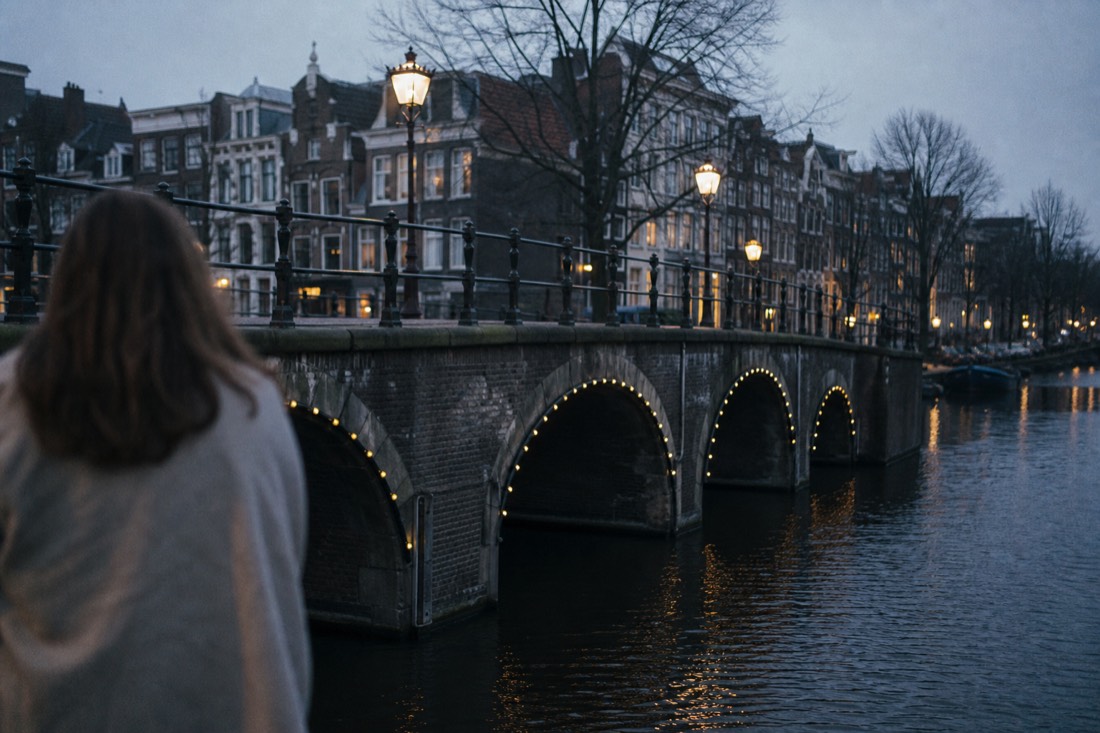
From the water the experience is different again. On a small boat you pass under the bridges rather than over them, so the seven-arch view becomes a sequence of frames, one every few seconds. Many evening cruises deliberately slow down through this stretch. If seeing the canal ring lit up matters more to you than seeing it in daylight, it is worth reading our piece on day versus night canal cruises before you pick a departure time.
One practical note about photographing it yourself: the classic seven-bridge shot is taken from the corner where the Reguliersgracht meets the Herengracht, looking south. You do not need a long lens, but you do need still water, so check the wind before you make the walk. On breezy days the surface chops up and the reflection dissolves, which is why so many of the best pictures of this street were taken at dawn or in the calm hour after sunset.
Still deciding which cruise to book?
Most Amsterdam canal cruises let you cancel for free up to a day before, and several offer pay-later booking, so you can lock a seat now and adjust your plans without risk.
What are the other contenders for the most beautiful canal street?
The Herengracht is the grandest, lined with the widest mansions and the famous Golden Bend; the Brouwersgracht is the most atmospheric, a warehouse-lined canal at the ring's western edge; and the Prinsengracht is the most lived-in, running past the Jordaan's cafés and houseboats. Each beats the Reguliersgracht on some measure of beauty.
The Herengracht's claim rests on wealth. It was designed as the canal for the richest merchants and officials, and the plots were laid out wider to prove it. The stretch known as the Golden Bend, between the Leidsegracht and the Vijzelstraat, holds the most concentrated row of double-width canal houses in the city. Walking it feels less like a street and more like an open-air museum of 17th-century architecture. From a boat, the mirrored facades glide past at a pace that makes the grandeur legible.
The Brouwersgracht, up at the western end of the ring where the canals meet the harbor, is the connoisseur's answer. It was built for trade, with brick warehouses, loading cranes and shuttered gables, and it never got gentrified into polish. At dusk, with houseboats tied along the quay and café windows lit, it is arguably the most atmospheric canal street in Amsterdam, just not the most symmetrical one.
The Prinsengracht is the everyday beauty. It borders the Jordaan, and its mix of narrow houses, houseboats, small bridges and café terraces gives it more human texture than any of the grander canals. Roughly 2,500 houseboats sit on Amsterdam's waters city-wide, with a large share of the most photogenic ones moored in and around the Singel area, and the Prinsengracht quays carry that same floating-neighborhood feel.
Here is how the main contenders compare:
| Canal street | What makes it beautiful | Best seen | Best for |
|---|---|---|---|
| Reguliersgracht | Seven bridges in one straight sightline | On foot at dusk, or from a slow boat | The classic photograph |
| Herengracht | Widest mansions, the Golden Bend, garden houses | From a boat mid-route | Architecture and grandeur |
| Brouwersgracht | Warehouse gables, cranes, houseboats, quiet | On foot, early morning | Atmosphere without crowds |
| Prinsengracht | Jordaan edge, houseboats, cafés, bridges | On foot or by open boat | Lived-in charm |
| Keizersgracht | Broader houses, calm middle canal | By bike along the quay | A quieter walk |
The Keizersgracht deserves a word too. It sits between the Herengracht and the Prinsengracht and takes the middle position in every sense: broader houses than the Prinsengracht, less ostentation than the Herengracht. It is the canal locals most often name when they want beauty without crowds.
What is the best way to see the most beautiful canal streets?
A canal cruise is the most efficient way to see them all, because the standard routes loop through the UNESCO canal ring in about an hour to 90 minutes and pass the Reguliersgracht, Herengracht, Keizersgracht and Prinsengracht in a single trip. Walking the same ground takes half a day and misses the water-level view entirely.
The water-level view is not a small thing. Amsterdam's canal houses were designed to be seen from the water, since goods arrived by boat and the gables faced the canal. From a boat you get the facades as they were meant to be read, plus the houseboats, the bridge undersides and the sheer verticality of the gables. The average canal is only about 2.6 meters deep, yet the houses beside it rise several stories above the quay, and that contrast reads very differently from a low seat on the water than it does from the pavement.
Choosing a cruise comes down to what you want alongside the view. A standard audio-guide cruise, like the 75-minute city canal cruise run by Blue Boat Company, covers the full ring with commentary and nothing else, which suits people who want the geography explained. A smaller saloon boat with cheese and wine suits people treating the cruise as an evening out. A pizza dinner cruise turns the route into a full meal on the water. Our longer comparison of the best canal cruise to take in Amsterdam breaks these choices down by traveler type.
Timing matters as much as the boat. The light on the canal ring changes completely across the day: mornings are soft and quiet, midday is flat and busy, and the blue hour turns the Reguliersgracht into the photograph everyone came for. If your whole goal is that view, book a sunset departure. If your goal is the architecture, take a daytime boat and look up.
For the budget side of the decision, our guide to what a canal cruise costs in Amsterdam covers the typical price bands, and whether you should book in advance is worth checking too, since the popular sunset slots fill first.
If you want the full ring explained while you ride, the standard city cruise is the workhorse option:
It runs 75 minutes with Blue Boat Company, Gray Line Amsterdam, holds a 4.4 rating across 19,764 reviews (checked September 2026), and the price is on the operator's live listing. The audio guide does the naming of canals and gable styles for you, which is genuinely useful on a first visit when every brick street looks equally beautiful and equally anonymous.
Do locals agree with the postcard answer?
Not always, and the disagreement is instructive. Many Amsterdammers find the Reguliersgracht over-photographed and would name the Brouwersgracht, the Bloemgracht or a quiet stretch of the Prinsengracht instead, because locals weigh calm and lived-in texture over postcard symmetry when they judge a canal street.
The Bloemgracht, a tiny T-shaped canal in the Jordaan, is the classic insider pick. It has no bridges stacked in a row and no Golden Bend, but its curve of narrow gabled houses and plane trees is the kind of street you remember without photographing. It is also a five-minute walk from the Prinsengracht, so it costs nothing to add to a walk.
This local-versus-postcard split is worth knowing before you plan, because it changes the route. The postcard itinerary is Reguliersgracht, Herengracht Golden Bend and the Amstel. The local itinerary is Brouwersgracht, Bloemgracht and the Jordaan stretch of the Prinsengracht. Most walking tours do one or the other, and most boat routes do a loop that touches both sides.
That licensing point matters for visitors more than it sounds. Because the narrow canal streets are regulated, only certain boat sizes can enter them, and the small saloon and open boats are the ones with access. The largest cruise ships stick to the wider canals. If the most beautiful canal street in Amsterdam is your target, the boat you choose determines whether you can actually get down it.
It also determines when you can go. The busiest stretches of the ring, including the approach to the Reguliersgracht, are managed by Waternet and the THOR unit, and boat traffic there is heaviest through the middle of the day. Early and late departures get you the same streets with fewer boats in the frame, which matters if photography is the point of your trip.
The best cruises for seeing the beautiful canal streets
Whichever itinerary you land on, these three cruises cover the postcard streets and the local ones well:
Between those options, one distinction is worth making on its own. The classic saloon boat cruise with cheese and wine is the pick most often recommended for this specific question, because the smaller boat size means it can thread the narrower canal streets that the biggest cruise ships skip, and the cheese-and-wine format turns the Reguliersgracht pass into an event rather than a commute.
It runs one hour with Flagship Amsterdam, holds a 4.6 rating across 26,218 reviews (checked September 2026), and the price is listed on the operator's live listing rather than quoted here. That review volume makes it one of the most-booked experiences in the city, and the format, a small covered saloon boat, is exactly the right vehicle for the narrow-canal sightlines around the Reguliersgracht.
Common questions about the most beautiful canal street in Amsterdam
The Reguliersgracht is the standard answer, the Brouwersgracht is the local answer, and the Herengracht is the grand answer, but readers ask a handful of practical follow-up questions about how to actually see these streets, which are answered below.
Which canal street in Amsterdam is considered the most beautiful?
The Reguliersgracht is the most common answer, thanks to its seven-bridge sightline that is the most photographed canal view in the city. The Herengracht, Brouwersgracht and Prinsengracht are the other strong contenders, each winning on a different measure of beauty.
Why is the Reguliersgracht so famous?
Its seven 17th-century bridges line up in one straight row, creating a receding tunnel of arches that no other Amsterdam canal offers. At dusk, with the water calm and the lamps lit, it produces the definitive Amsterdam photograph.
Can you see the Reguliersgracht from a canal cruise?
Yes, many cruises pass through or alongside it, but only smaller boats can enter the narrowest stretches. Small saloon and open boats have the best access, while the largest cruise ships stay on the wider canals.
What is the most beautiful canal to walk along instead?
Walk the Brouwersgracht early in the morning for warehouse atmosphere, then follow the Prinsengracht past the Jordaan. Add the Bloemgracht for the quiet, local version of canal beauty that the postcards skip.
Is the Golden Bend on the Herengracht worth seeing?
Yes. The stretch between the Leidsegracht and the Vijzelstraat holds the widest concentration of double-width 17th-century mansions in the city, and it is best appreciated from a boat at a slow pace.
How long does it take to see the beautiful canal streets on foot?
A focused walk covering the Reguliersgracht, a stretch of the Herengracht and the Prinsengracht takes about half a day at a relaxed pace. A canal cruise covers the same ground from the water in about an hour to 90 minutes.
The honest conclusion is that Amsterdam does not have one most beautiful canal street, it has four or five, and the winner depends on whether you came for geometry, grandeur or atmosphere. The Reguliersgracht is the answer to the question as asked. The Brouwersgracht is the answer most locals would give. And the only way to settle it for yourself is to get on the water and compare, which is exactly what Amsterdam Canal Cruises is here to help you do.